Research

Organizations, technology, and economic geography

Research Map: questions and the works that connect them

Long-term research program · Initial concept

The Korean Mode of Production through an Organizational Lens: Cross-Industry and Cross-National Comparative Research

This long-term program takes organizations as the starting point for understanding the relationship between technological change and economic geography. Existing research on South Korean shipbuilding and industrial cities provides a point of departure.

The aim is to develop comparisons across shipbuilding, automotive, and semiconductor industries and across national settings. Rather than assuming a single Korean model, the program asks which arrangements recur, where they differ, and how organizations connect technology to particular places. The three themes below organize these questions.

  1. 01Organizational capabilities & technological change
  2. 02Technology in organizations
  3. 03Engineers & Economic Geography

01Organizational capabilities & technological change

Ongoing

QuestionWhy do accumulated executional routines fail to transform into a new architectural regime?

Approach

I examine capabilities through the organization of production: how work is divided within firms and across their boundaries, and how design, coordination, and execution are brought together. Shipbuilding and offshore engineering provide the starting point for field-based and historical inquiry into the accumulation of these capabilities.

Published work

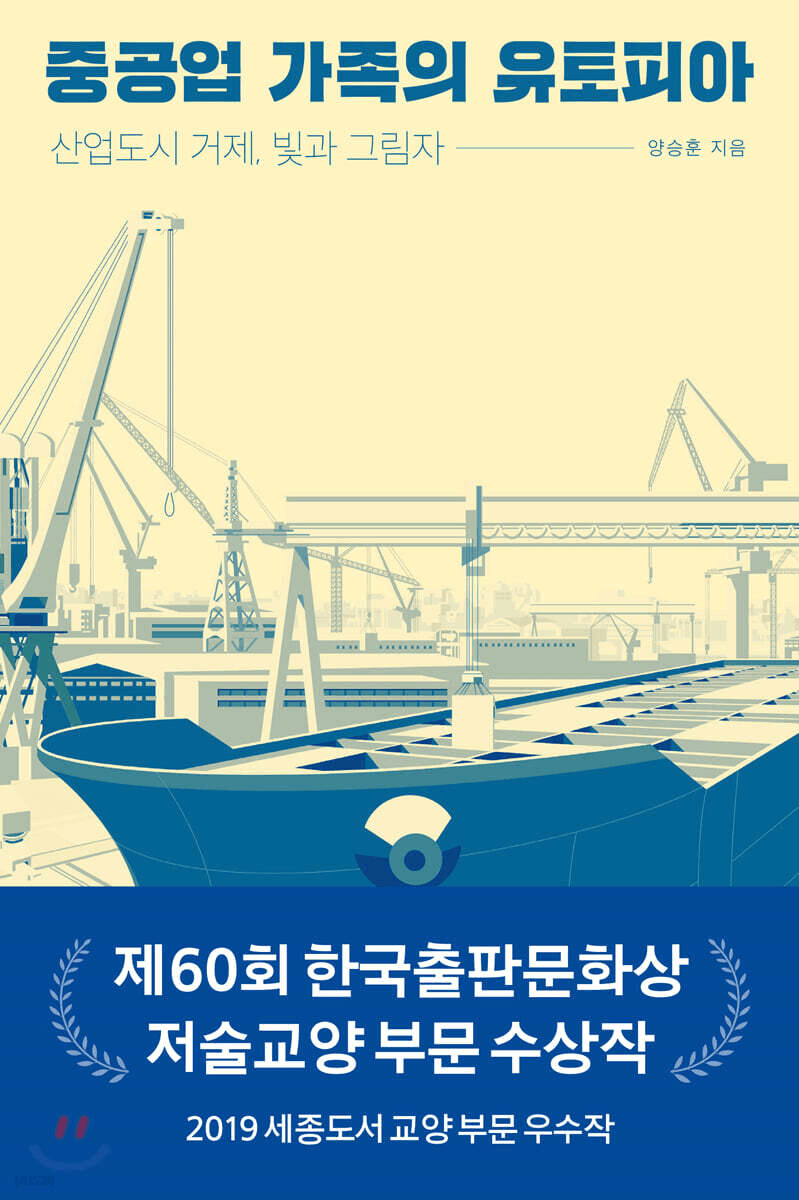
The Utopia of the Heavy-Industry Family situates production in the interlocking worlds of companies, families, and Geoje. Locked-in Innovation (2025) brings together research on production-mode changes and the multiple challenges facing South Korean shipbuilding. These works connect questions of industrial performance to the social organization that sustains it.

Questions ahead

The next comparative question is how capabilities accumulated under one production system relate to those required by another. The longer-term program will explore this question across shipbuilding, automotive, and semiconductor industries, and across national organizational settings.

The drillship Deepwater Proteus illuminated at dusk
Daewoo Shipbuilding & Marine Engineering, 2016

02Technology in organizations

Ongoing

QuestionWhat organizational conditions obstruct or reshape the adoption of smart factories, digital twins, and physical AI?

Approach

I approach digital transformation through the work that makes technologies usable in organizations. This brings organizational sociology into conversation with STS: who produces and maintains data, how that work is organized, and how formal plans for automation meet everyday production practices.

Published work

The Human Backend of Smart Shipyards examines the precarious work that keeps shipyard data stable. It places the labor behind digital systems at the center of the analysis, connecting the apparent stability of data to the employment and organizational conditions under which it is produced.

Questions ahead

This line of inquiry asks what organizational arrangements allow smart factories, digital twins, and AI to take hold in production. It directs attention to data maintenance, coordination, and the division of labor alongside the technical performance of a system.

Related work

03Engineers & Economic Geography

Ongoing

QuestionHow do production organizations and labor markets shape the formation, mobility, and settlement of engineers and the spatial division of regional economies?

Approach

I study engineers as a workforce formed within particular production organizations and places. Combining field research with historical and quantitative analysis, this inquiry connects technical labor markets to gendered divisions of work, employment opportunities, and the conditions of settlement in industrial regions.

Published work

Gender, Engineering, and Innovation examines industrial patriarchy and women engineers’ entry and retention in southeastern South Korea. Ulsan Dystopia and Levitating Factory place workforce questions alongside the history of manufacturing growth, urban change, and the changing status of Hyundai Motor’s Ulsan plant.

Questions ahead

The comparative agenda asks how industries and regions organize the formation, mobility, and retention of technical workers. Korea, Japan, and Taiwan are prospective comparative settings for examining the relationship between production organizations and the geography of engineering work.

Related work

Long-term & ongoing research

Industrial Patriarchy and the Politics of Scale

Ongoing

QuestionHow do gender orders and social reproduction in industrial regions intersect with the politics of scale and regional restructuring?

Approach

This continuing agenda brings regional sociology and gender studies into conversation. It asks how gendered work and social reproduction in industrial regions intersect with struggles over the distribution of authority and resources across national, regional, and urban scales.

Published work

My research on local university students follows work experience and job search in southeastern Korea. Joint work with Haenam Park compares megacity projects in Busan–Ulsan–Gyeongnam and Kansai, while work with Hyang-A Lee critically examines local extinction discourse. Alongside the Geoje and Ulsan books and the study of women engineers, these works connect regional futures to unequal opportunities and social reproduction.

Questions ahead

Ongoing work with Joo-Hyoung Ji continues the inquiry into industrial patriarchy at the intersection of gender and region. Work with Minwook Chang connects questions about young people’s subject formation and political sensibilities to the broader debate over regional futures.

Related work

Further projects & collaborations

Circuits of Mobility and Staying (working title)

Planned

QuestionHow do pathways out of industrial cities diverge from pathways of staying?

Conceptual work and a literature review explore young people’s mobility and staying in industrial cities.

Provincializing AI: Reconstructing Regional Futures in Korea's Semiconductor Clusters

Paused

QuestionHow is the geography of semiconductor talent drawn, and how do its boundaries shape regional futures?

With Hyomin Kim, this project examines the mobility of semiconductor talent and discourse around the “southern limit of Pangyo” at the intersection of gender and region.

Grants

Cumulative, PI projects: KRW 196,068,000 · Co-investigator amounts are project totals, not individual allocations.

Principal investigator

Co-investigator / participant